 Türkçe
 English
 Deutsch
 Français
 Español
 Italiano
 Русский
 العربية
 日本語
 简体中文
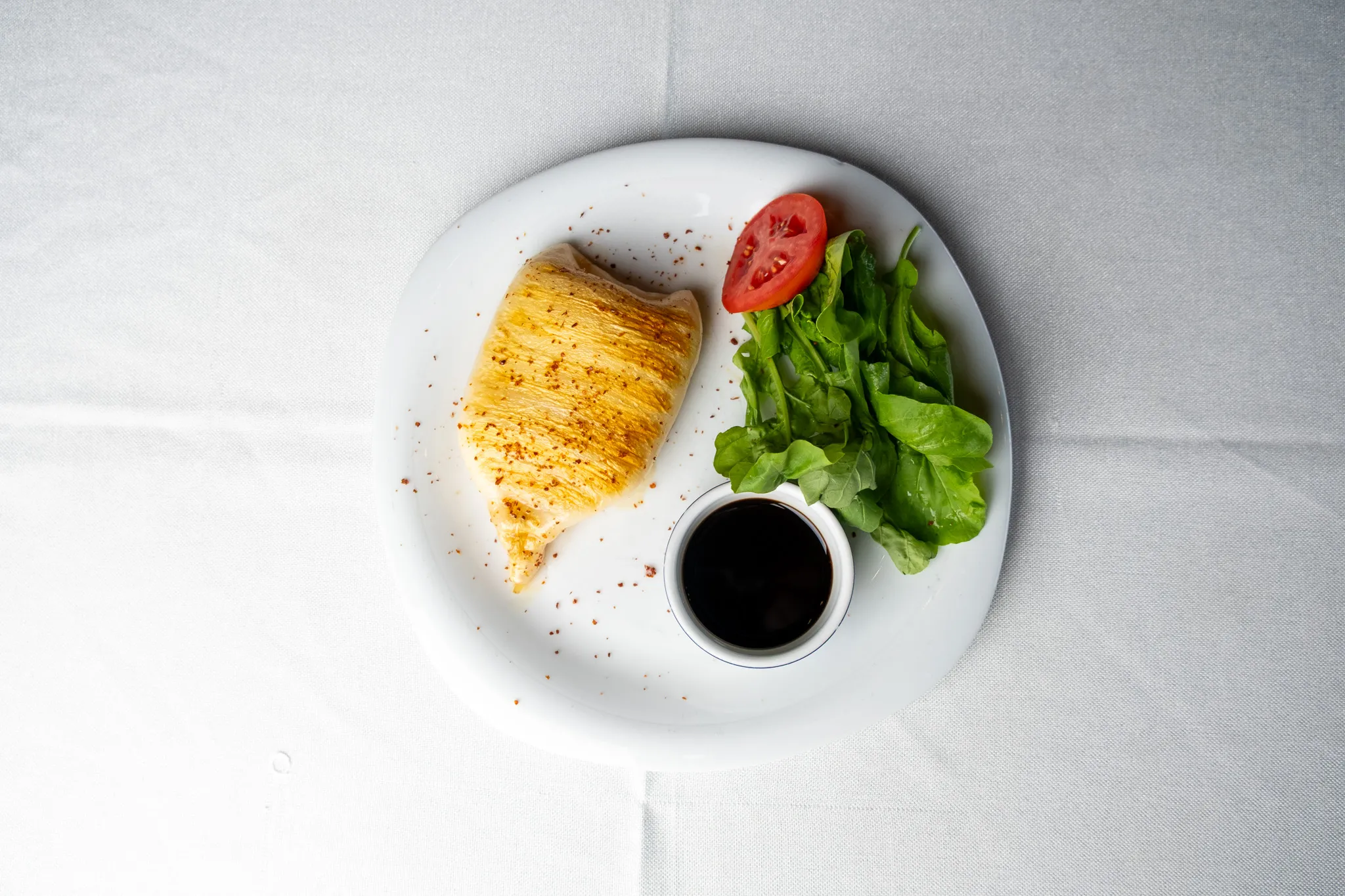
The short answer: oily fish such as bluefish, bonito and mackerel are best grilled; small fish such as anchovy, horse mackerel and red mullet are best pan-fried; delicate white fish such as sea bass, sea bream and whiting are lovely poached (buğulama) or grilled; and large fish of around a kilo or more, such as sea bass, sea bream or common pandora, shine when baked in salt. Fish baked on a clay tile with vegetables suits anyone who wants a juicy, light plate without bones.
Below you will find what each method does to a fish, a pairing table based on the fish on the Yıldızlar menu, and how a whole fish is filleted at the table. At Yıldızlar you choose your fish from the display on ice and decide how it is cooked with your waiter; this guide is here to make that decision easy.
How do you choose a cooking method at a fish restaurant?
Three questions are enough:
- Is the fish oily or lean? Oily fish love high heat and cook in their own fat. Lean fish need gentler heat or they dry out.
- How big is it? Small fish fry whole and turn crisp. A large fish for two or three people cooks more evenly baked in salt or in the oven.
- What kind of plate do you want? Grilled for a smoky, simple flavour; poached or on a clay tile for something juicy with sauce; pan-fried for a crisp crust.
The season matters too. In autumn and winter the counter fills with oily migrating fish; in summer coastal and farmed fish take centre stage. Our Istanbul fish season calendar shows what to expect each month.
Grilled fish: which fish suit the grill?
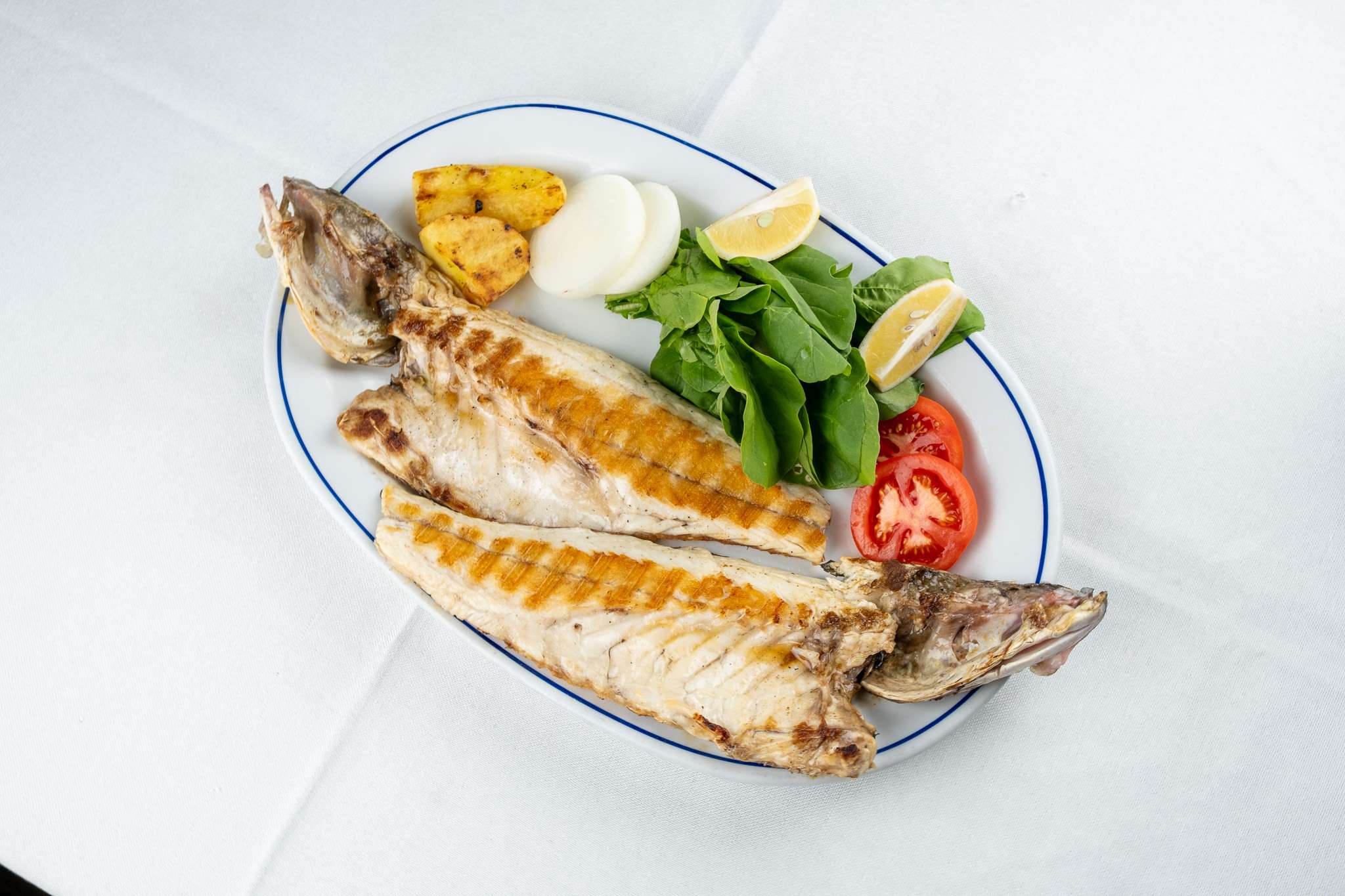
Grilling (ızgara) is the simplest and most loved way to cook fish in Istanbul. The fish cooks quickly over hot charcoal: the skin chars, the flesh stays moist. On the plate there is only lemon, arugula, onion and a little olive oil, because the fish itself is the star.
Oily fish suit the grill best: bluefish (lüfer), bonito (palamut), mackerel (uskumru), çinekop, sarıkanat and sardines. They baste themselves and soak up the smoke. Sea bass (levrek) and sea bream (çipura) are also favourites, grilled whole or butterflied.
The one thing to watch is thin, lean, small fish, which can dry out over the coals. They are usually fried instead.
Pan-fried fish: which fish are fried?
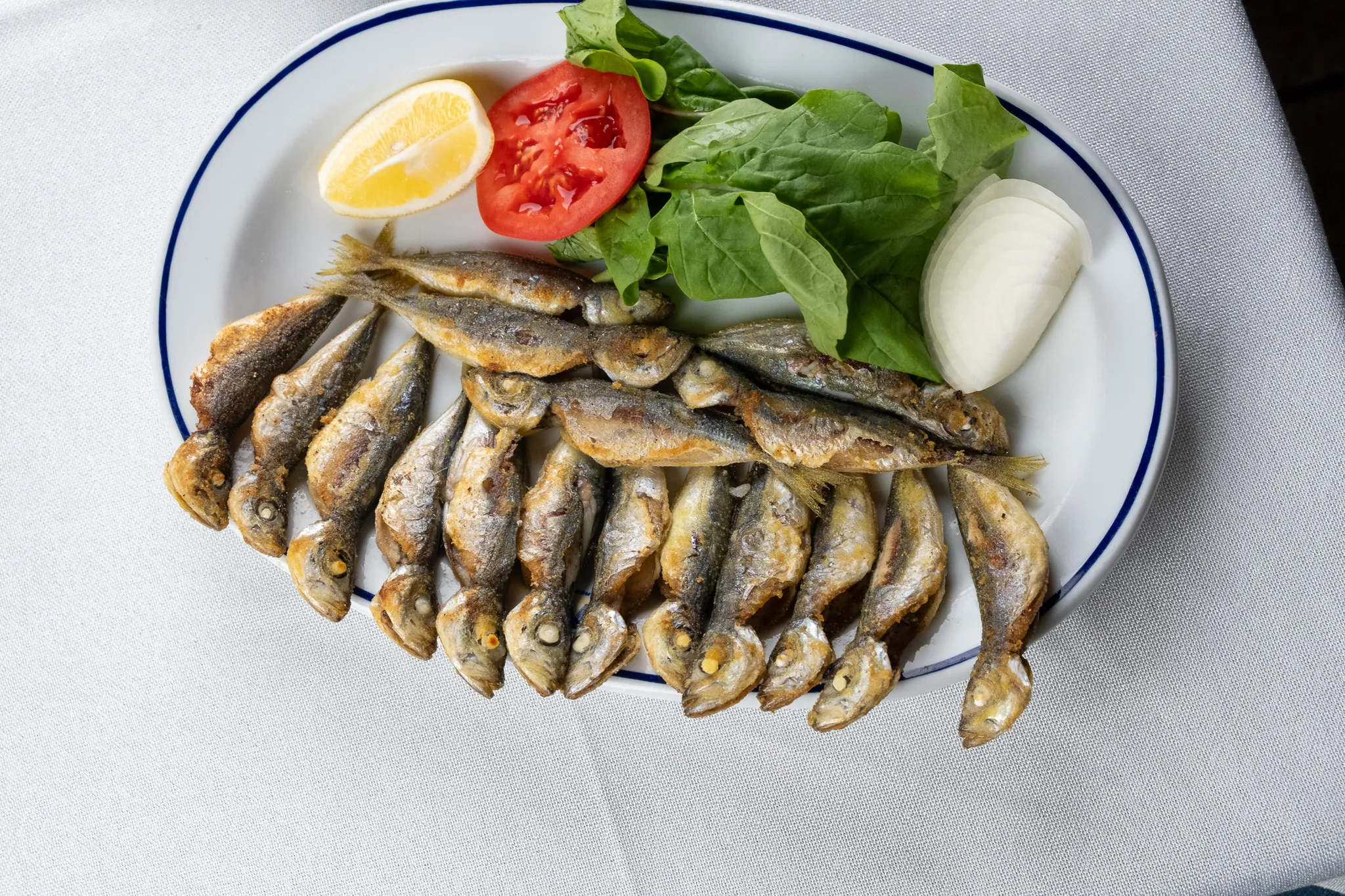
Pan-frying (tava) is the classic method for small and medium fish. The fish is dusted with cornmeal or flour and fried briefly in hot oil. The outside forms a crisp crust while the inside stays tender and steamy.
The best fish for frying are anchovy (hamsi), horse mackerel (istavrit), red mullet (barbunya), whiting (mezgit), sole (dil) and turbot (kalkan). Anchovies and horse mackerel are fried whole and often eaten with your fingers; in small fish the fine bones crisp up and soften. Red mullet and sole show off their delicate flesh in the pan, and turbot is fried in thick slices, one of the most sought-after plates of winter.
Buğulama: poached fish, light and juicy
Buğulama is fish poached slowly in a covered pan with its own juices and vegetables: tomato, peppers, onion, bay leaf and a little lemon or white wine. Very little oil goes in, so it is one of the lightest options.
It suits delicate white fish: sea bass, sea bream, whiting, dusky grouper (lagos) and slices of common pandora (mercan). The sauce is half the dish, so ask for warm bread. Balık Buğulama on our menu is exactly this plate.
Fish on a clay tile: baked with vegetables
For kiremitte balık, the fish is baked in a terracotta tile dish with tomato, peppers, mushrooms and onion. The clay gives slow, even heat, and the fish juices mix with the vegetables into a light sauce. The dish arrives at the table still bubbling.
This method suits white fish fillets and is a good choice if you want a plate you can eat with a spoon, with no bones to worry about. Look for Kiremitte Balık on the menu.
Salt-baked fish: a showpiece for a big fish
For tuzda balık, a whole fish is buried in a crust of coarse salt, often mixed with egg white, and baked. The crust hardens and the fish steams in its own juices. At the table the crust is cracked open, the skin is lifted away and juicy white flesh appears underneath.
The most common question is whether it tastes salty. It does not: the skin and the hard crust keep most of the salt out. Salt baking is for a sea bass, sea bream, common pandora or dusky grouper of around a kilo or more, ideal for a table of two or three. Tuzda Balık is one of Yıldızlar’s signature dishes; it takes longer than grilling, so order it early.
Which fish, which method? A quick table
| Fish | Best method | Note |
|---|---|---|
| Bluefish (lüfer) | Grilled | At its oiliest in autumn and winter |
| Bonito (palamut) | Grilled | Rich and plump; does not dry out |
| Mackerel (uskumru) | Grilled | Takes the charcoal smoke beautifully |
| Çinekop, sarıkanat | Grilled, fried | Smaller sizes of bluefish |
| Sea bass (levrek) | Grilled, poached, salt-baked | Large ones are superb in salt |
| Sea bream (çipura) | Grilled, poached, salt-baked | Available all year |
| Common pandora (mercan) | Salt-baked, grilled | Large ones shine in salt |
| Dusky grouper (lagos) | Poached, grilled (steaks) | Thick, firm flesh |
| Red mullet (barbunya) | Fried, grilled | Delicate flesh, best fried |
| Horse mackerel (istavrit) | Fried | Small ones fried whole |
| Anchovy (hamsi) | Fried | The star of the Black Sea in winter |
| Whiting (mezgit) | Fried, poached | Light and soft |
| Sole (dil) | Fried, grilled | Thin and delicate |
| Turbot (kalkan) | Fried, grilled | In thick slices |
| Salmon (somon) | Grilled | As a fillet |
Treat the table as a starting point. The size and fat of the day’s fish can vary, and your waiter will tell you the best way to cook that particular fish.
How is a whole fish filleted at the table?
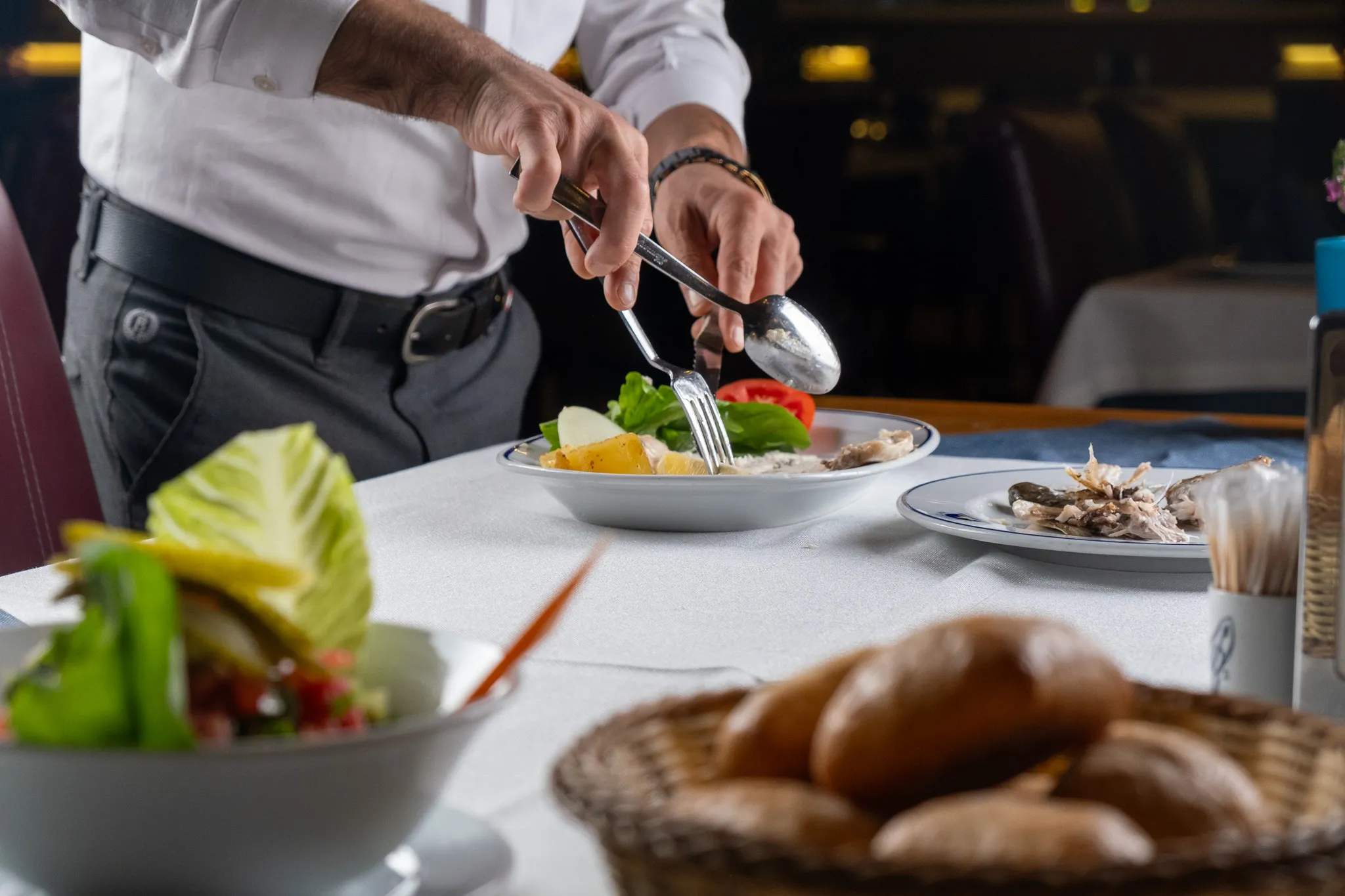
Ordering a whole fish is the way to eat it at its best: the bones and skin keep the flesh juicy while it cooks. There is no need to worry about bones. At Yıldızlar our waiters fillet the fish at your table and share the meat out onto your plates.
If you would like to do it yourself:
- Push away the thin rows of fins along the back and belly with your fork.
- Run your knife lightly along the spine from head to tail.
- Lift the top fillet off to both sides with your fork and move it to your plate.
- Hold the backbone by the tail and lift it towards the head in one go; most of the bones come with it.
- Take the bottom fillet the same way and check for any fine bones left.
Do not skip the cheek: it is the fishermen’s favourite little bite.
Avoiding surprises when you order fish
- Choose your fish from the display and ask its weight and price before it is cooked. At Yıldızlar fish is priced by season and weight.
- Tell your waiter how many of you there are, so they can suggest the right size.
- If you want a salt-baked or large oven-baked fish, order early; it takes longer.
- A few meze and a hot starter go well before the fish. For the order of a rakı table, see our rakı and meze guide.
Choose your fish at Yıldızlar and decide how it is cooked together
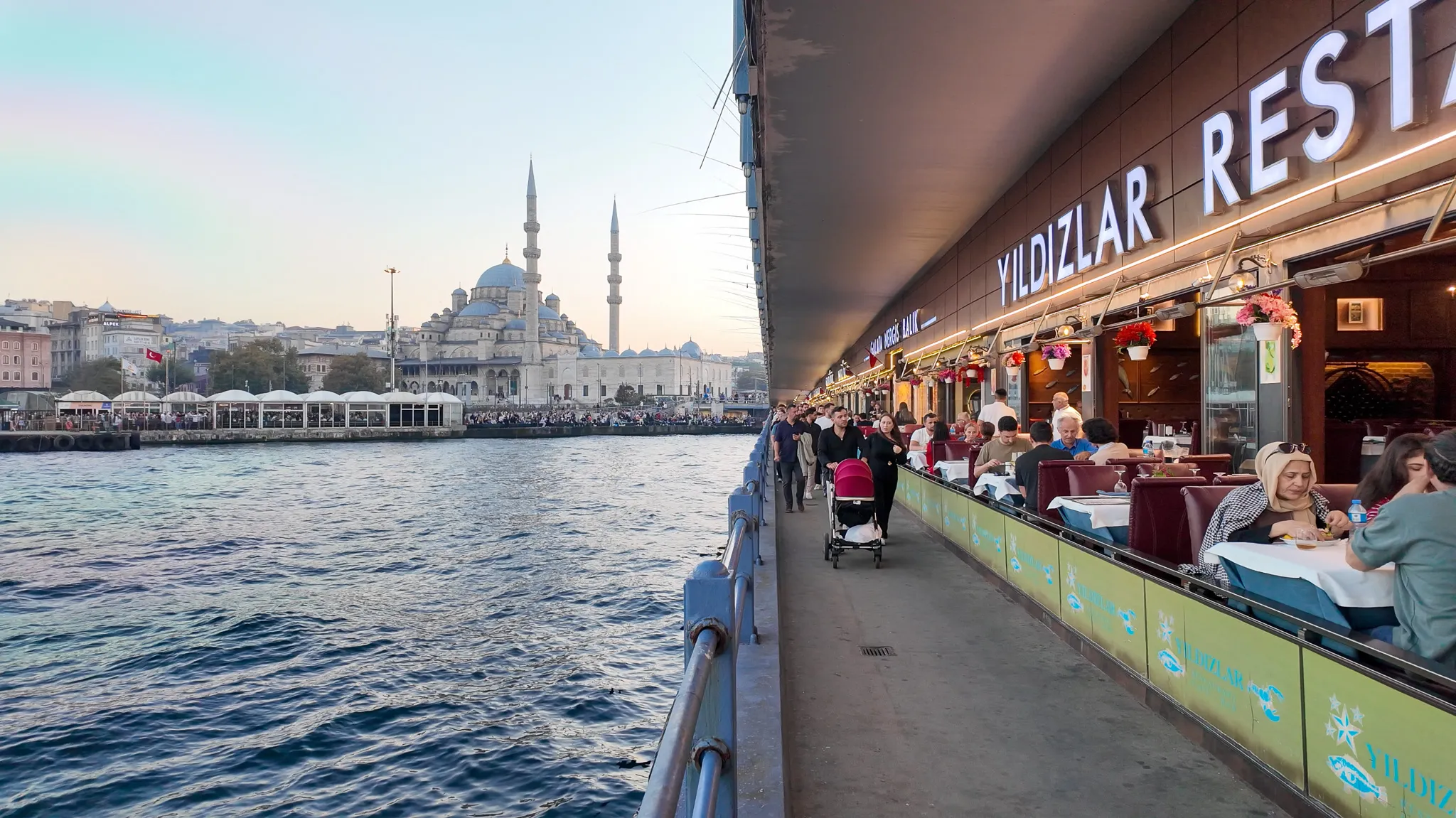
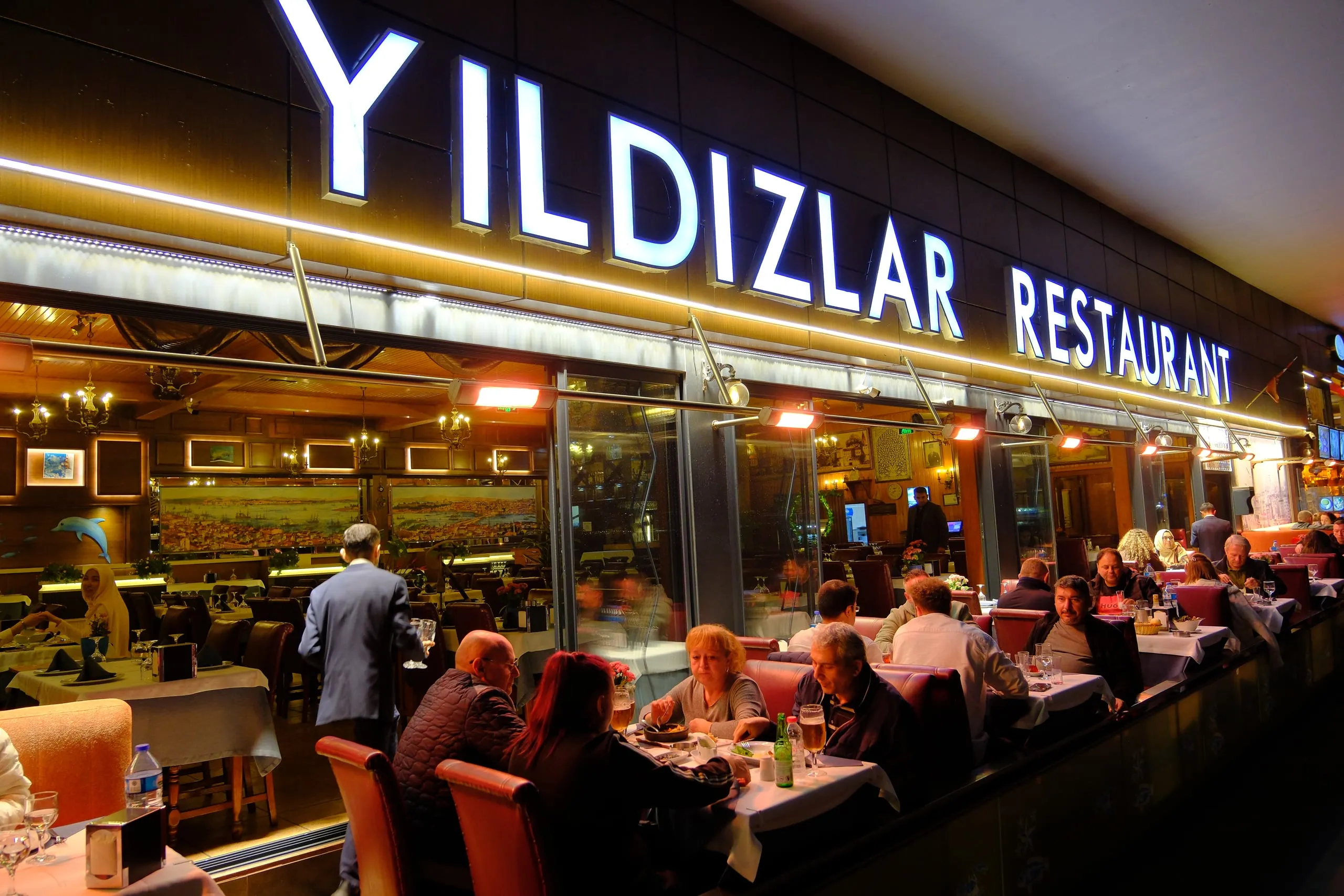
Yıldızlar Restaurant has been on the Galata Bridge since 1980 and today sits on the lower level of the new bridge at the Eminönü end, facing the Bosphorus. We are open every day from 10:00 to 02:00. You pick your fish from the display on ice, and we decide together whether it is grilled, fried, poached, cooked on a clay tile or baked in salt.
See the day’s fish and cooking options on our menu, then reserve your table with the online form. For group dinners of 10 to 200 people, see events and group bookings.