 Türkçe
 English
 Deutsch
 Français
 Español
 Italiano
 Русский
 العربية
 日本語
日本語 简体中文
简体中文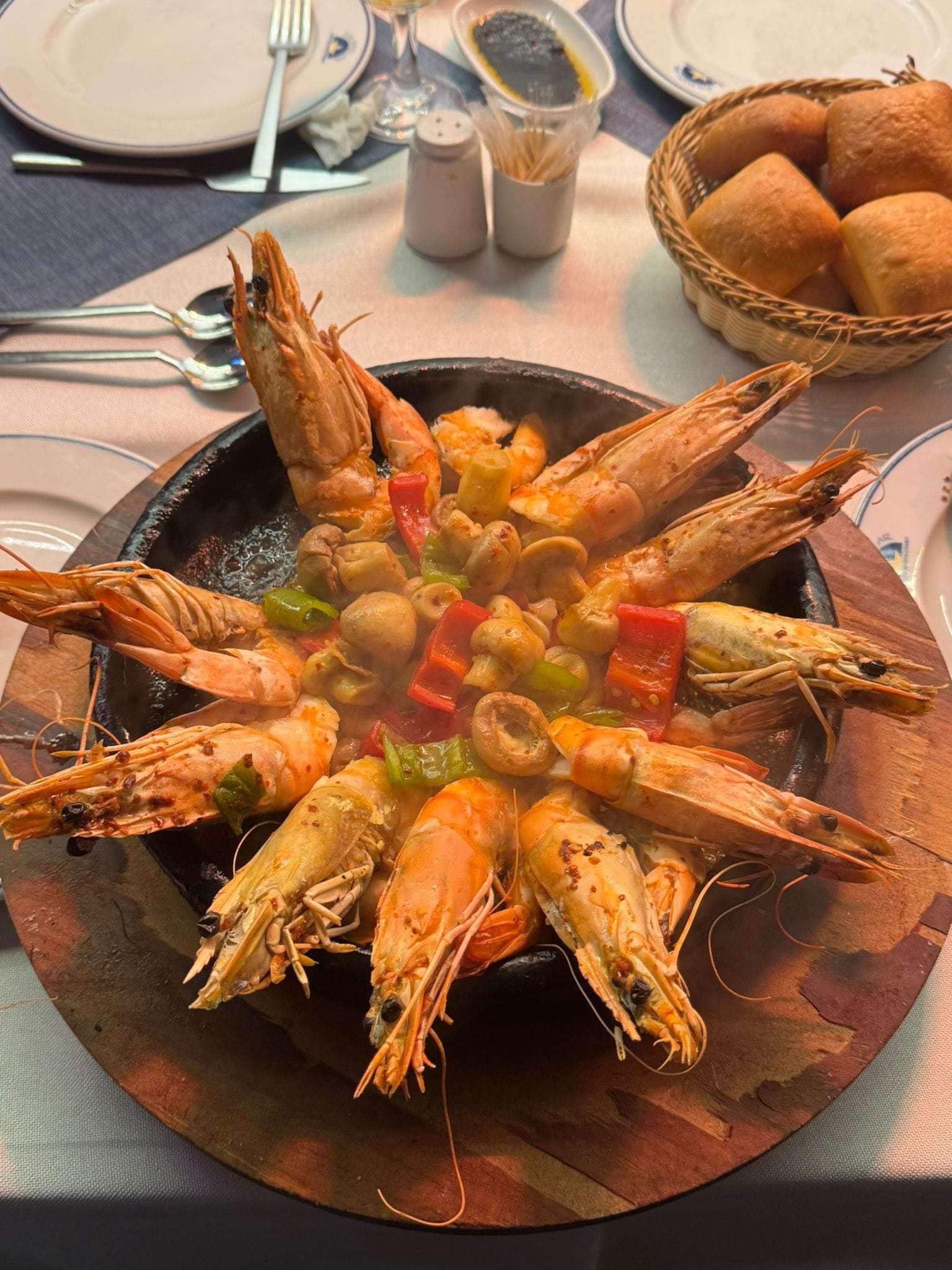
To drink rakı the Turkish way, pour the rakı first, add cold water until it turns milky white, and add ice last if you want it at all. Then sip slowly between small plates: white cheese and melon, cold meze, sea meze, hot starters and finally fish. A rakı table is a long, slow meal, not a round of drinks.
Below is a practical guide for first-timers: what rakı actually is, why it changes colour, how to pour it, the order the meze arrive in, which dishes from the Yıldızlar menu suit it, and the small customs that make the evening feel right.
What is rakı?
Rakı is Türkiye’s anise spirit, distilled from grapes. It is protected as a designation of origin (registration no. 136, protected since 15 April 2009), and the registration document published by the Turkish Patent and Trademark Office sets out the rules:
- It must be at least 40 percent alcohol by volume.
- At least 65 percent of the alcohol going into the still must be suma, a grape spirit made only from grapes grown in Türkiye, fresh, dried or both.
- The second distillation happens with Turkish-grown aniseed (Pimpinella anisum) in traditional copper stills of 5,000 litres or less.
- Every stage, from grape must to bottling, takes place in Türkiye.
Most rakı is bottled at around 45 percent, and some at 50, according to Wikipedia’s overview of the drink. That strength is the reason nobody knocks it back neat. Water is part of the drink.
Why does rakı turn white when you add water?
The milky colour comes from anethole, the aromatic oil in aniseed. Anethole dissolves easily in strong alcohol but not in water. When you add water, the alcohol level drops, the oil comes out of solution and forms millions of tiny droplets, and those droplets scatter light. The clear spirit turns opaque white in seconds. Chemists call this spontaneous emulsification, better known as the ouzo effect, and the same thing happens with ouzo, pastis and arak.
That white glass gave rakı its nickname, aslan sütü, or lion’s milk. In Turkish, calling someone an aslan means they are strong and brave, so the name is half a joke: milk, but for the strong.
How do you pour and drink rakı?
There are two traditional ways: mixed with cold water in the glass, or neat with a glass of chilled water on the side, sipped in turns. For a first time, the mixed version is easier. This is the usual method at an Istanbul fish table:
- Use a tall, narrow rakı glass, with a second glass for plain water.
- Pour the rakı first. A finger or two is plenty.
- Top up with cold water. Many people go roughly half and half; more water makes it softer and more aromatic.
- Add ice last, if at all. Many old hands skip it or keep the ice in the water glass, saying ice dropped onto neat rakı makes it cloud unevenly and dulls the anise.
- Keep sipping plain water alongside, and eat between sips.
If the anise feels sharp, add water. Nobody will judge a paler glass.
In what order do meze arrive on a rakı table?
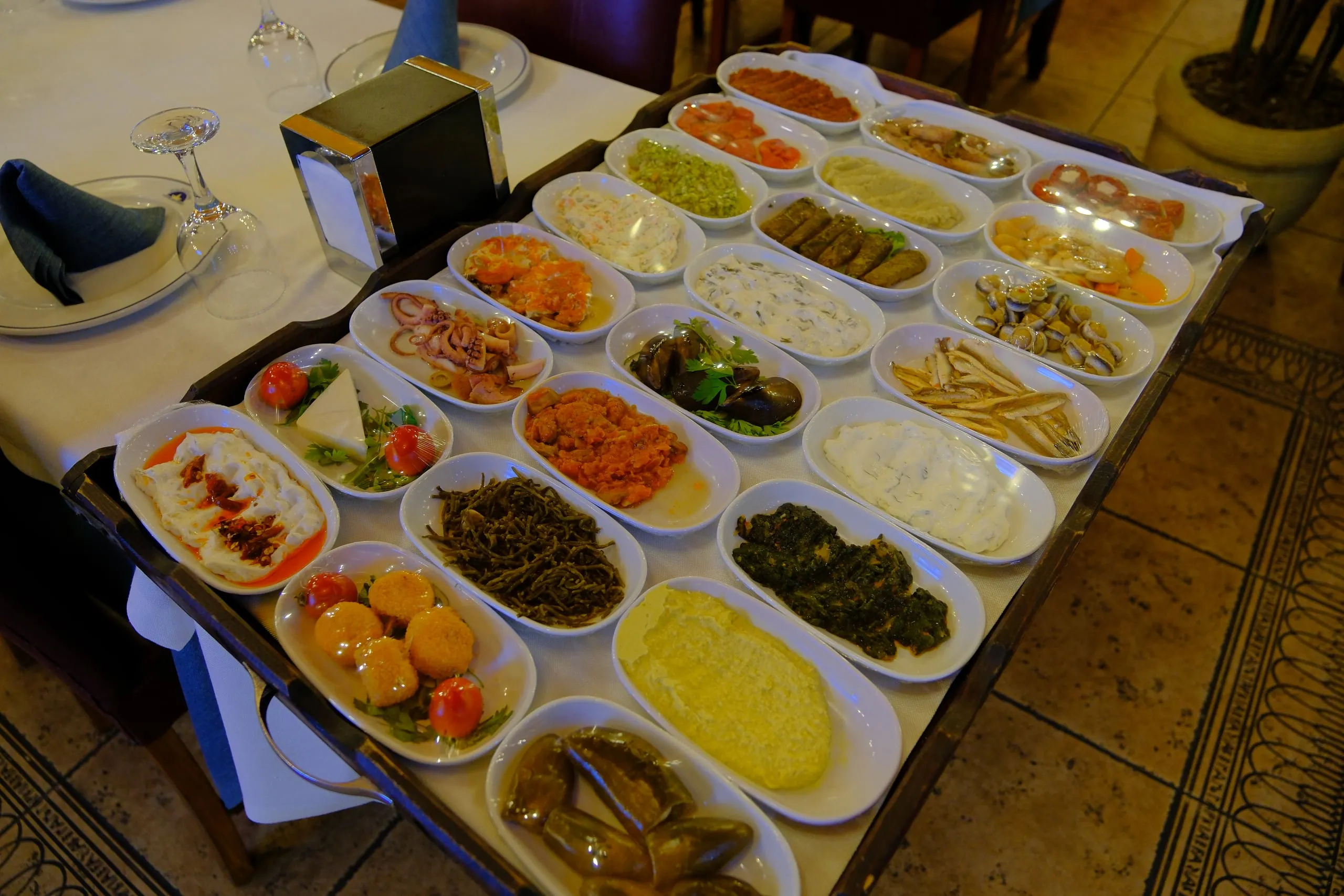
A rakı table moves from cold to hot and from light to rich. The rough order most Istanbul fish restaurants follow:
- White cheese and melon. The classic opener: salty feta-style cheese and sweet, cold melon. Melon is a summer fruit, so ask what is available.
- Cold meze. Olive-oil vegetables and dips, often brought on a tray so you can point at what you want.
- Sea meze. Cured and marinated fish such as lakerda and çiroz.
- Hot starters (ara sıcak). Fried squid, butter shrimp, fish kokoreç.
- The fish. One whole fish to share, grilled or cooked another way.
- Fruit or dessert, with tea or Turkish coffee to close.
Order a few plates at a time rather than everything at once. The meal is meant to last, and the kitchen can pace the hot dishes once you are ready.
What to eat with rakı: meze that work
Anise loves salt, acidity and a bit of fat. These dishes from our menu are traditional rakı partners:
| Meze | What it is | Why it works with rakı |
|---|---|---|
| Haydari | Thick strained yoghurt with garlic and herbs | Cool and creamy; it softens the alcohol |
| Acılı ezme | Finely chopped spicy tomato, pepper and onion relish | Heat and sourness wake up the anise |
| Deniz börülcesi | Samphire dressed with olive oil, garlic and lemon | Salty, green and sea-fresh, light enough to start with |
| Lakerda | Salt-cured bonito, sliced and served with red onion | Oily and salty, the textbook rakı meze |
| Çiroz | Salted, dried mackerel with dill, olive oil and vinegar | Sharp and chewy; one strip goes a long way |
| Balık kokoreç | Crisp-fried pieces of fish, served hot with rocket and onion | A hot, crunchy break between the cold plates |
| Tereyağında karides | Shrimp cooked in butter | Rich butter against the clean anise |
For two people, four or five cold meze and one hot starter is plenty before the fish; patlıcan ezme (smoky aubergine) and yaprak sarma (stuffed vine leaves) are good additions.
Which fish go best with rakı?
The phrase rakı balık (rakı and fish) is close to a single word in Turkish, and almost any fish works. Some pairings stand out:
- Oily autumn fish such as lüfer (bluefish), palamut (bonito) and uskumru (mackerel), grilled simply. The anise cuts through the fat.
- Delicate white fish such as levrek (sea bass), çipura (sea bream), kalkan (turbot) or dil (sole). Keep your rakı more diluted so it does not cover the flavour.
- Slow-cooked dishes such as buğulama (fish poached with tomato and peppers) or fish baked on a clay tile, where the juices pair well with a milder glass.
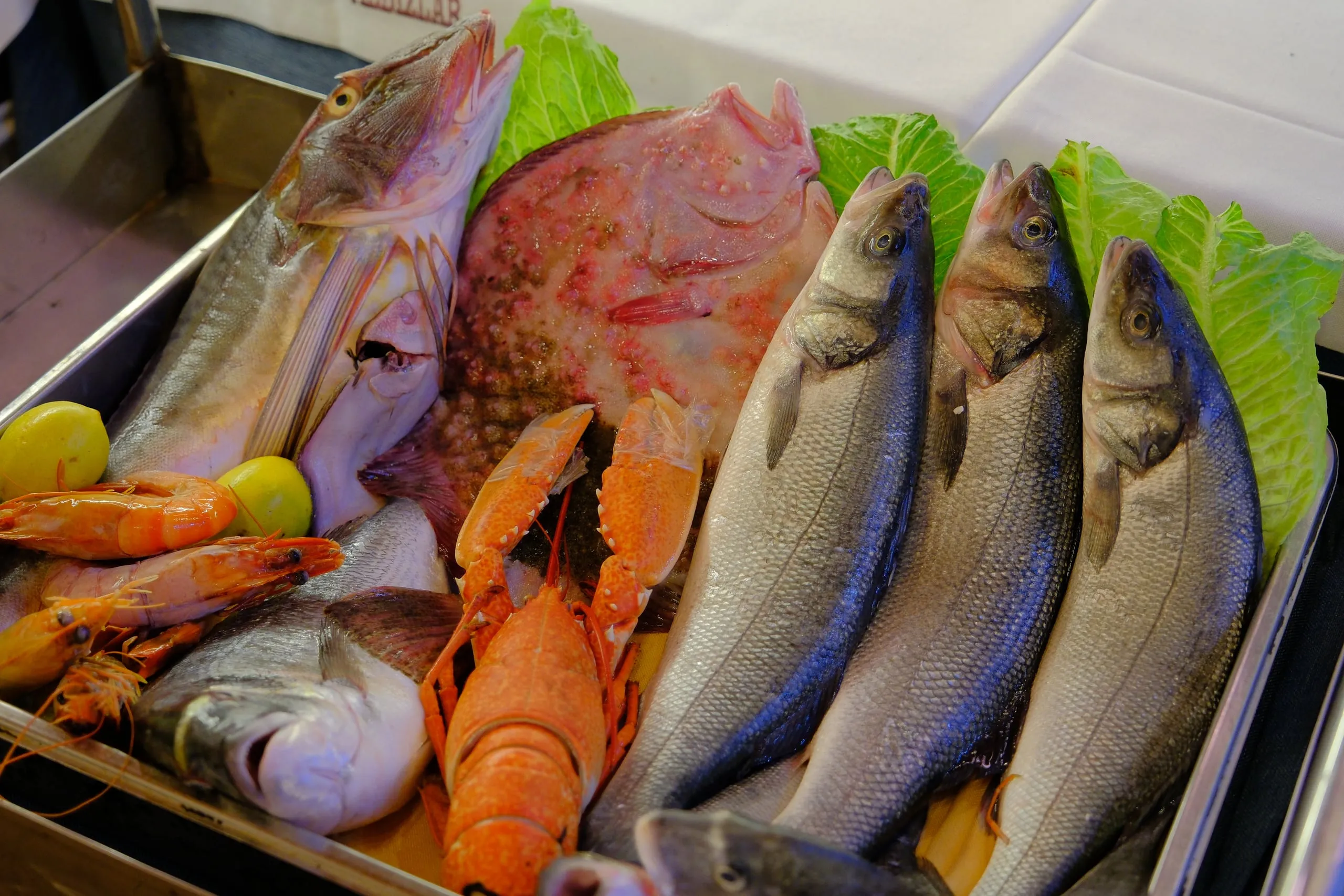
At Yıldızlar you choose your fish from the display on ice and decide the cooking method with your waiter. Fish prices depend on season and weight, so ask for both before it goes on the grill. Which fish are on the counter depends on the month; our Istanbul fish season calendar shows what to expect.
Rakı etiquette: toasts, pace and unwritten rules
- Say “şerefe.” It means “to honour” and is the standard toast. Look people in the eye when glasses meet.
- Clink low. Many Turks touch glasses near the bottom, and the younger person or the guest often lowers their glass slightly below an elder’s as a sign of respect.
- Go slowly. A rakı table often lasts three or four hours. Sip, eat, talk, repeat. Rakı is never a shot.
- Never on an empty stomach. That is why the cheese and meze come first.
- The talk matters more than the drink. Turks call it muhabbet, the long, warm conversation that a good table makes possible.
- Not drinking? The meze order works just as well with ayran, mineral water or fresh orange juice.
And the obvious one: if you have had rakı, do not drive. The tram stop and ferry pier are a few minutes’ walk from the bridge.
Book a rakı and meze table at Yıldızlar
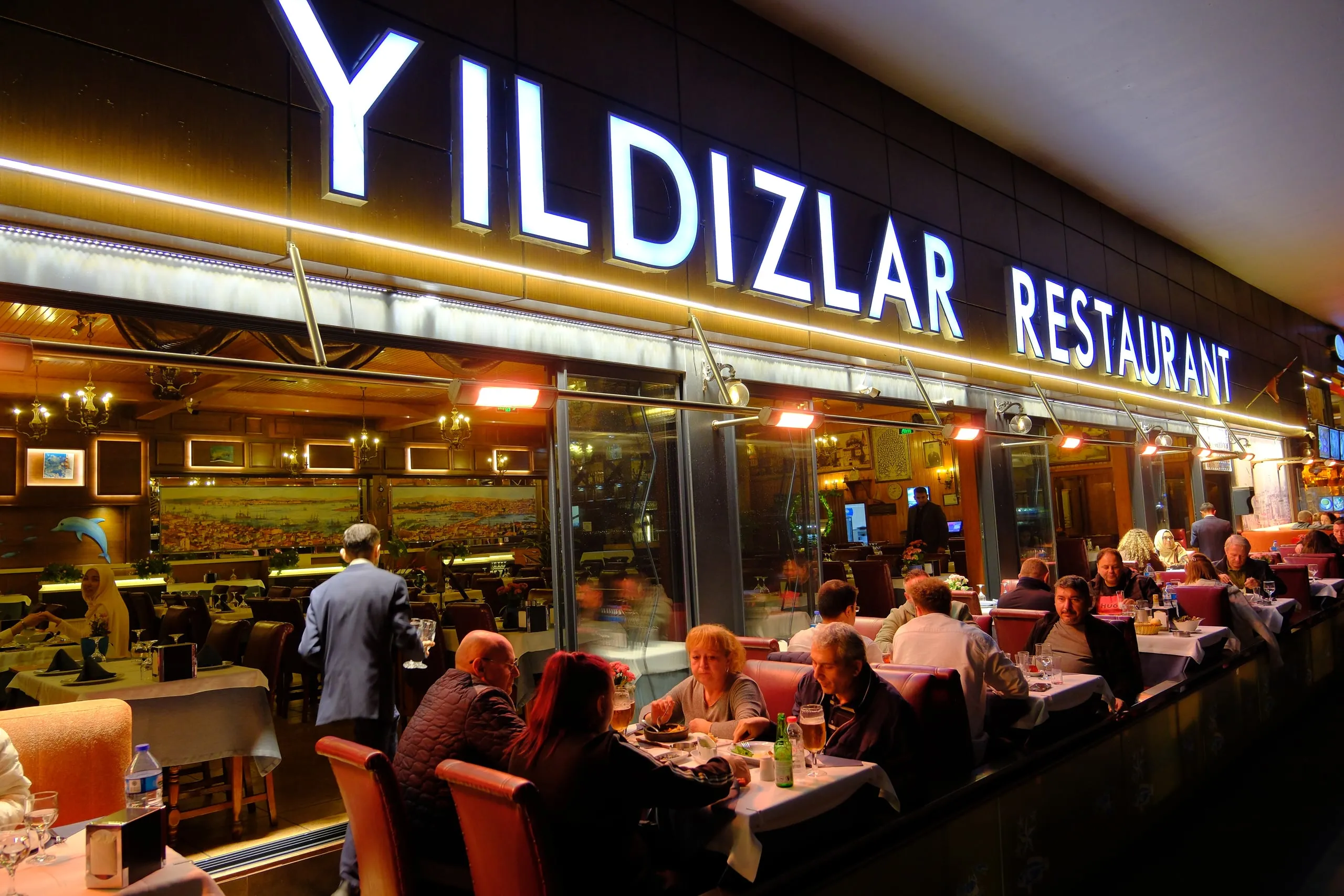
Yıldızlar Restaurant opened in 1980 on the old Galata Bridge and today sits under the new bridge, on the lower level at the Eminönü end, facing the Bosphorus. We are open every day from 10:00 to 02:00, with window and open-air tables looking across to Üsküdar, Karaköy and the Galata Tower.
Browse the full list of cold meze, sea meze and hot starters on our menu, then reserve your table with the online form. For a group dinner of 10 to 200 people, see events and group bookings. A 15 percent service charge is added to prices.